

Plant of the Month January 2026
GENERAL INFORMATION: Black locusts can be a problen in the landscape and gardens. A member of the pea family, they are quick growing, thorny, with many racemes of strongly scented of white flowers. They are listed as an invasive plant in some areas. However, the cultivar 'Twisty Baby' is a delight as a smaller, specimen tree.
Synonym: Robinia pseudoacacia 'Lace Lady’. Patented In 1996.
Common Name: Twisty Baby Black Locust.
Life Cycle: Medium sized deciduous tree.
Height: listed as growing to 3 m tall. However, one growing in East York is over 7 m tall.
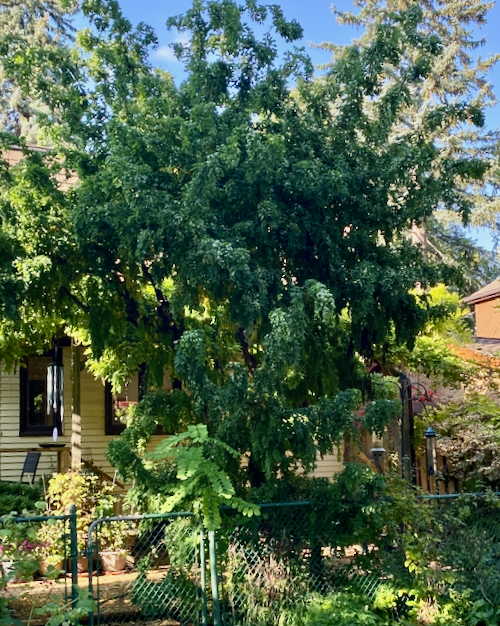
Robinia pseudoacacia 'Twisty Baby' with sucker.
Branches: Zig-zag branches up to 2 m long. These twisted branches give winter interest.
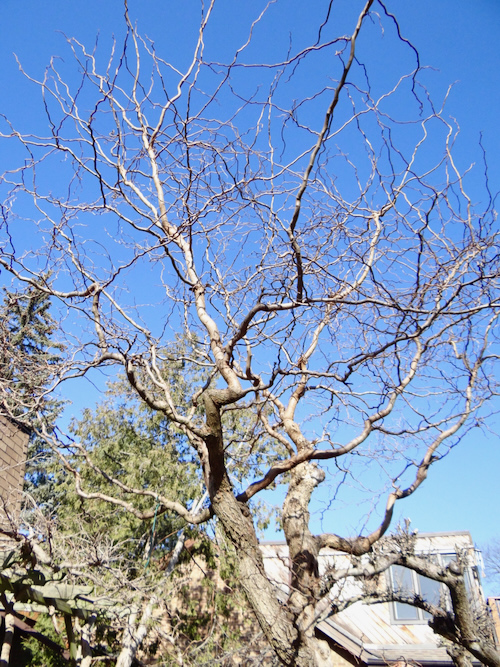
'Twisty Baby' winter.
Bloom Time: Late May in Southern Ontario. Very few blooms.
Flower Colour & Size: Few tight clusters of white pea flowers.
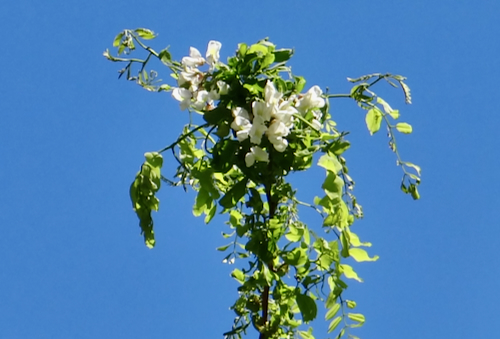
'Twisty Baby' flowers.
Scent: Grape like.
Leaves: Compound pinnate, down hanging, dark green leaves with 2cm long, often curled leaflets turning yellow in late fall or staying green till they drop.
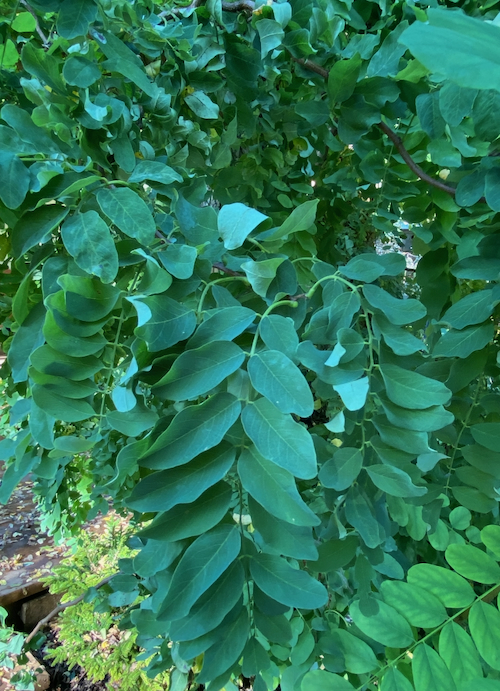
Robinia pseudoacacia leaves with 'Twisty Baby' behind.
Fruit: I have never seen seed pods. The parent has flat, purple-brown seed pods 10 cm long.
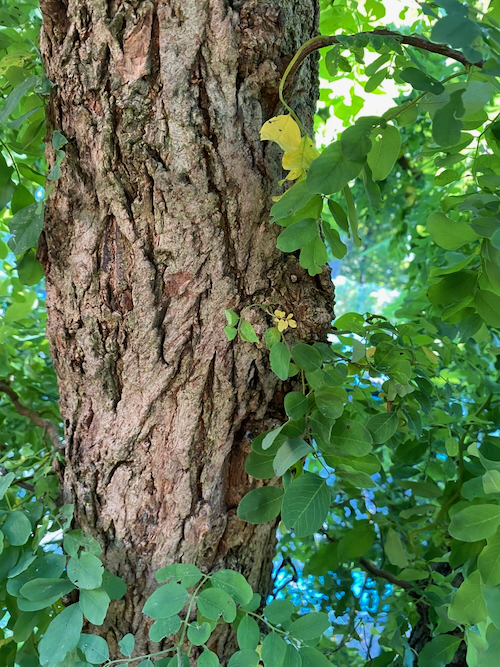
'Twisty Baby' bark and leaves.
Bark: Twisted and showy giving winter interest. Prune so some is visible when in leaf.
Range: The parent was originally native in the Allegheny Mountains. Now wide spread.
Habitat: Robinia pseudoacacia grows in open woodland and forest edges. Invasive.
CULTIVATION:
Plant: for year round interest.
Light: Full sun to partial shade.
Soil: Will grow in most growing conditions: a wide range of soils, even poor, dry ones. Like all members of the pea family, it can absorb nitrogen from the soil.
Water: Well drained.
USDA Hardiness: Zones 3-8.
Pests and Diseases: Borers can be a problem. Luckily woodpeckers often find them. Also scale, leaf miner, leaf spot, powdery mildew and canker can occur.
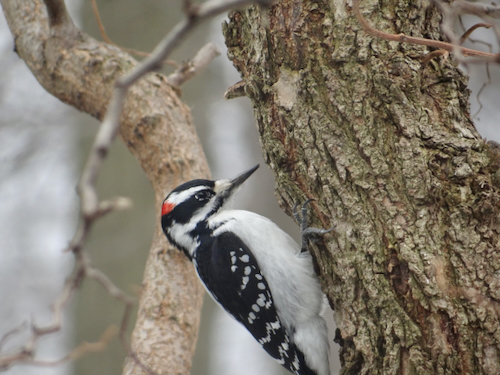
Hairy Woodpecker on 'Twisty Baby' bark.
Propagation: By grafting on Robinia pseudoacacia.
Pruning: Cut out any dead or diseased wood in spring and thin and reduce long branches.
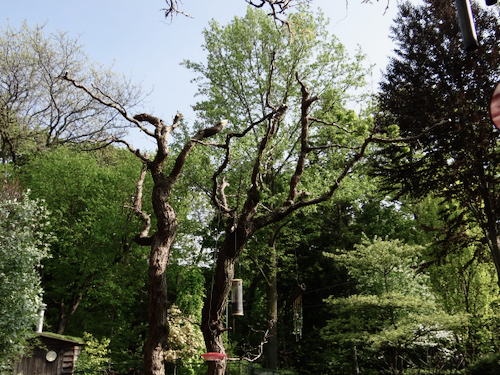
'Twisty Baby' in spring after pruning.
Problems: Few short spines. Suckers will appear, often several metres away. These are not ‘Twisty Baby’ and may grow 2 m in a couple of months.
References:
Wikipedia
https://www.missouribotanicalgarden.org/PlantFinder/PlantFinderDetails.aspx?taxonid=262580
https://www.nvknurseries.com/plant/Robinia-pseudoacacia-Twisty-Baby-Lace-Lady
Text and images supplied by Anna Leggatt